
So... What do potatoes and tomatoes have in common?
Weather!
Every crop on every field around the globe depends on it. From the first seed to the harvest, knowing what the weather is doing makes the difference between a good season and a lost one.
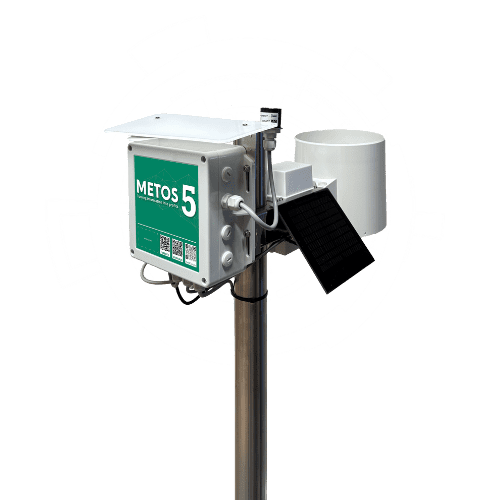
💡Did you know? Most weather forecasts are based on stations at airports or in towns, often many kilometres away from the field. But frost, rain and humidity can change a lot over short distances. A valley field can freeze while the airport stays above zero. A weather station in the field measures what is really happening where the crop grows.
Free VWS offer valid until 17 October 2026 only.
STAGE 1: Planting
Without METOS: Farmer plants based on the calendar and gut feeling. A late cold snap after planting can rot the seed in the ground before it even sprouts.
With METOS: Soil temperature and moisture sensors show exactly when the ground is ready. Plant too early and risk rot, too late and lose growing season.
💡Did you know? Since 1900, about 75% of crop genetic diversity has disappeared from farmers’ fields. Every seed planted today carries a bit of that history!
STAGE 2: Emergence & early growth
Without METOS: A late frost after the shoots emerge can wipe out the young plant overnight. The farmer finds out the next morning, too late to act.
With METOS: Frost warnings arrive hours in advance, giving time for protective measures (irrigation, covering).
💡Did you know? Disasters like frost, drought and floods have cost an estimated 3.8 trillion US dollars in lost crops and livestock over the last 30 years. That’s about 123 billion dollars every year!
STAGE 3: Flowering and fruit setting
Without METOS: This is when the plant “decides” how many potatoes, tomatoes or grains it will produce. Too little water or too much heat now shrinks the harvest, and often nobody notices until it’s too late to fix.
With METOS: Soil moisture and temperature data show exactly when the crop needs water or protection, right when it matters most.
💡Did you know? Agriculture uses about 70% of all the freshwater people take from rivers, lakes and underground.
Knowing exactly when to water saves more than just the crop.
STAGE 4: Growing and ripening
Without METOS: Warm, humid weather quietly helps plant diseases spread. By the time the leaves show it, the disease has already moved through the field.
With METOS: Disease risk models use temperature and leaf wetness to flag danger before symptoms appear, so growers can protect the crop instead of trying to save it.
💡Did you know? Up to 40% of the world’s crops are lost to plant pests and diseases every year!
STAGE 5: Harvest
Without METOS: Farmers know their fields, but the weather can still surprise them. Unexpected rain at harvest time damages the crop and makes it spoil faster in storage.
With METOS: Soil and weather data show the best harvest window, so experience is backed by real numbers from farmer’s own field.
💡Did you know? Around 14% of the world’s food is lost after harvest, before it even reaches the shops!
Fries, meet Ketchup
Potatoes and tomatoes, finally together on one plate. The weather helped grow them both, from the first seed to the harvest. And weather still has one last job: telling you whether to enjoy them on a picnic blanket or at the kitchen table.
💡Did you know? The potato is one of the world’s most important food crops, right after rice and wheat.
It even has its own UN day: 30 May, the International Day of Potato. Planning a picnic to celebrate? Check the weather first.
Free VWS offer valid until 17 October 2026 only.
 English (UK)
 Deutsch
 Italiano
 Español
 Français
 Português
 Русский
 Українська
 Polski
 Türkçe
 Magyar
 Română